| < PREVIOUS | NEXT > |
JOINS
The SQL Joins clause is used to combine records from two or more tables in a database. A JOIN clause is used to combine rows from two or more tables, based on values common to each.
Lets look at selection from the “Customers” Table:
| ID | NAME | AGE | ADDRESS | SALARY |
|---|---|---|---|---|
| 1 | Ramesh | 32 | Ahmedabad | 2000.00 |
| 2 | Khilan | 25 | Delhi | 1500.00 |
| 3 | kaushik | 23 | Kota | 2000.00 |
| 4 | Chaitali | 25 | Mumbai | 6500.00 |
| 5 | Hardik | 27 | Bhopal | 8500.00 |
| 6 | Komal | 22 | MP | 4500.00 |
| 7 | Muffy | 24 | Indore | 10000.00 |
Lets look at “Orders” Table also:
| OID | DATE | CUSTOMER_ID | AMOUNT |
|---|---|---|---|
| 102 | 2009-10-08 00:00:00 | 3 | 3000 |
| 100 | 2009-10-08 00:00:00 | 3 | 1500 |
| 101 | 2009-11-20 00:00:00 | 2 | 1560 |
| 103 | 2008-05-20 00:00:00 | 4 | 2060 |
Notice that the “Customer_ID” column in the “Orders” table refers to the “ID” in the “Customers” table. The relationship between the two tables above is the “CustomerID” column. Now, let us join these two tables in our SELECT statement:
SELECT ID, NAME, AGE, AMOUNT
FROM Customers, Orders
WHERE  Customers.ID = Orders.Customer_ID;
This will produce:
| ID | NAME | AGE | AMOUNT |
|---|---|---|---|
| 3 | kaushik | 23 | 3000 |
| 3 | kaushik | 23 | 1500 |
| 2 | Khilan | 25 | 1560 |
| 4 | Chaitali | 25 | 2060 |
You can be more specific by using SELECT Customers.ID, Customers.NAME, Customers.AGE, Orders.AMOUNT and it will yield same result.
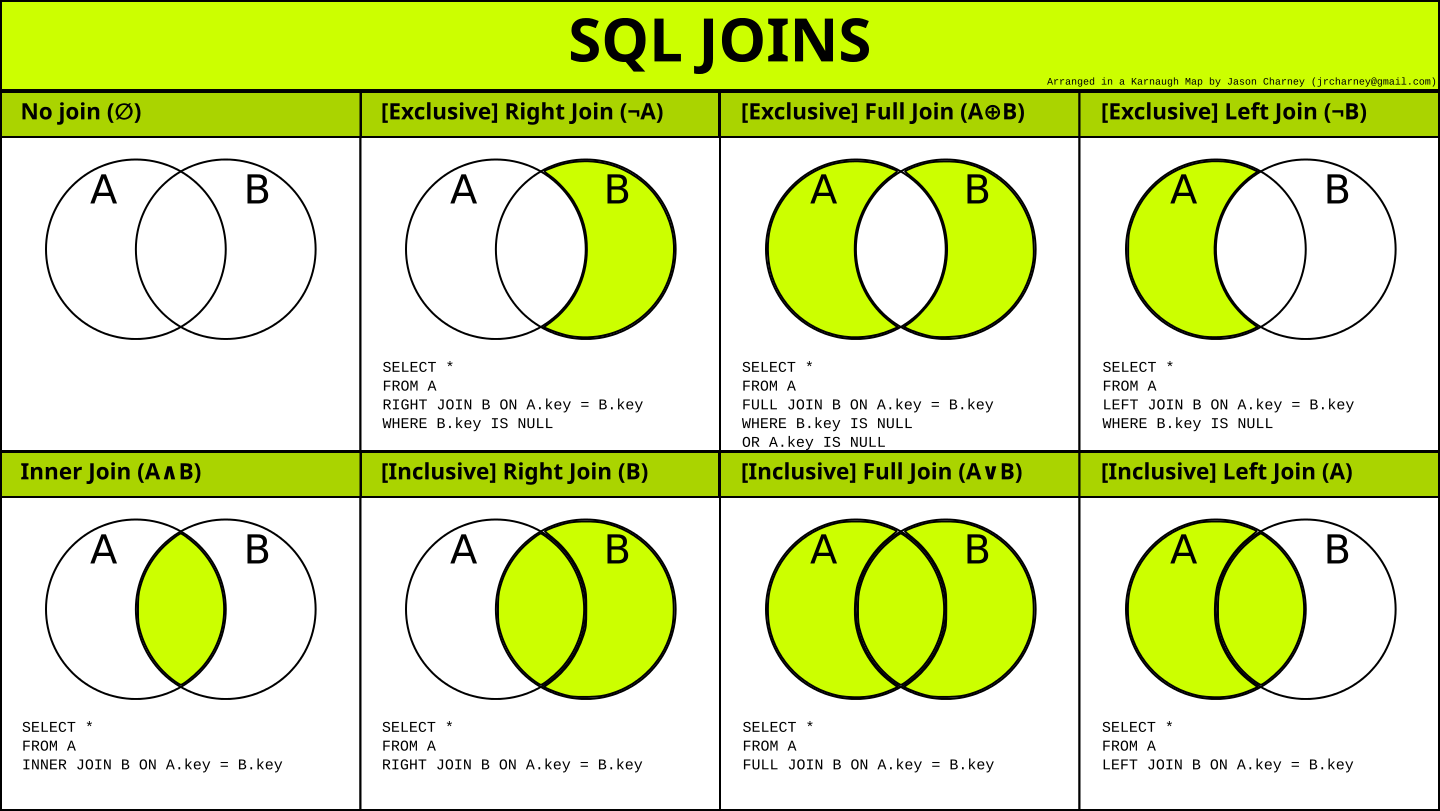
DIIFERENT TYPES OF SQL JOINS:
- INNER JOIN: Returns records that have matching values in both tables
- LEFT (OUTER) JOIN: Returns all records from the left table, even if there are no matches in the right table.
- RIGHT (OUTER) JOIN: Returns all records from the right table, even if there are no matches in the left table.
- FULL (OUTER) JOIN: Returns all records when there is a match in either left or right table
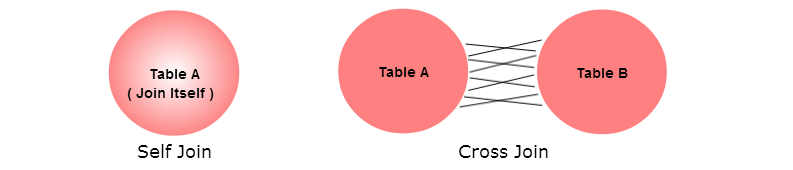
- SELF JOIN: Is used to join a table to itself as if the table were two tables, temporarily renaming at least one table in the SQL statement.
- CARTESIAN JOIN or CROSS JOIN: Returns the Cartesian product of the sets of records from the two or more joined tables.
| < PREVIOUS | NEXT > |